
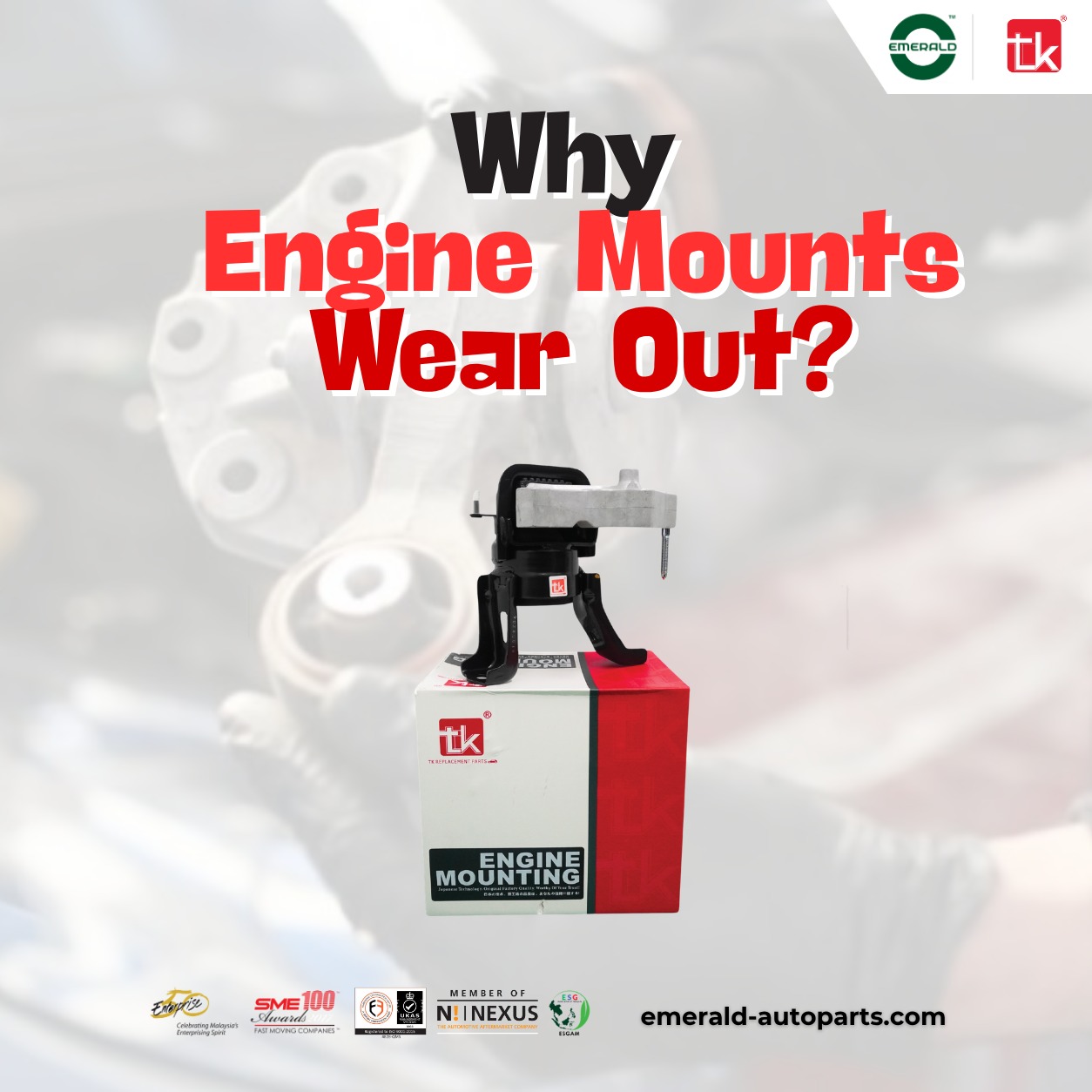
Why Engine Mounts Wear Out?
Engine mounts, also known as motor mounts, secure the engine and transmission to the vehicle while helping absorb vibration and control engine movement.
Over time, constant mechanical stress, heat, fluid contamination, rough road conditions, and natural aging can cause engine mounts to deteriorate.
Common Causes of Engine Mount Failure
- Normal Wear and Tear
Engine mounts constantly absorb vibration and movement during acceleration, braking, and gear changes. Over time, the rubber can lose its elasticity, crack, tear, or deform.
- Oil and Fluid Leaks
Engine oil and other fluids can damage the rubber when they repeatedly come into contact with the mount, causing it to soften, swell, crack, or deteriorate.
- Excessive Engine Torque
Hard acceleration, frequent gear changes, aggressive driving, or modified engines can place additional stress on engine mounts and accelerate wear.
- Heat and Temperature Changes
The engine bay is exposed to high temperatures and repeated heating and cooling cycles. Over time, this can cause rubber to become hard, brittle, and less effective at absorbing vibration.
- Age and Environmental Exposure
Even vehicles with low mileage can experience engine mount deterioration. Rubber naturally loses flexibility over time due to aging, oxidation, humidity, and environmental exposure.
- Rough Road Conditions
Frequent driving over potholes, speed bumps, and uneven roads can create additional shocks and vibrations, increasing stress on the engine mounts.
- Other Worn Mounts
Engine and transmission mounts work together. When one mount becomes weak, the remaining mounts may carry additional load, accelerating their wear.
Common Warning Signs
A worn engine mount may cause:
- Excessive vibration, especially at idle
- Clunking or knocking sounds
- Excessive engine movement
- Jerking or jolting during gear changes
- Vibration when starting or switching off the engine
- Visible cracks, tears, or deformation
These symptoms may also be caused by other mechanical issues, so proper inspection is recommended before replacing the mount.
Why Replace a Worn Engine Mount?
A damaged engine mount can allow excessive engine movement and place additional stress on surrounding components, including the exhaust system, hoses, wiring, transmission, and other mounts.
Replacing a worn mount at the right time can help restore proper engine support, reduce unwanted vibration, and maintain a smoother driving experience.
Why Choose TK Engine Mounts?
TK Engine Mounts are designed to provide reliable engine support, control engine movement, and help reduce unwanted vibration.
Key Benefits
- Reliable Support – Helps keep the engine and transmission securely positioned.
- Vibration Control – Helps reduce unwanted vibration and noise.
- Stable Performance – Designed for everyday driving conditions.
- Quality Replacement – Suitable for replacing worn or damaged engine mounts.
- Wide Application – Available for various vehicle models.
Final Thoughts
Engine mounts are exposed to constant mechanical stress, heat, vibration, fluids, and environmental conditions. Regular inspection can help identify wear early and maintain proper engine support.
TK Engine Mounts — Reliable Support. Smoother Drive.
Visit Emerald Auto Parts (https://emerald-autoparts.com/) or reach out directly:
Whatsapp: +6012-638 9647
Tiktok :
www.tiktok.com/@emerald.auto.part
Facebook :
https://www.facebook.com/EmeraldAPSB/
Instagram :
https://www.instagram.com/emerald_auto