
Why Minimum Brake Disc Thickness Matters – Don’t Ignore It!
When we think about brake maintenance, most of us focus on brake pads — the squeaky, obvious part of the system. But here’s a reality check: brake discs wear out too, and ignoring them can seriously compromise your safety.
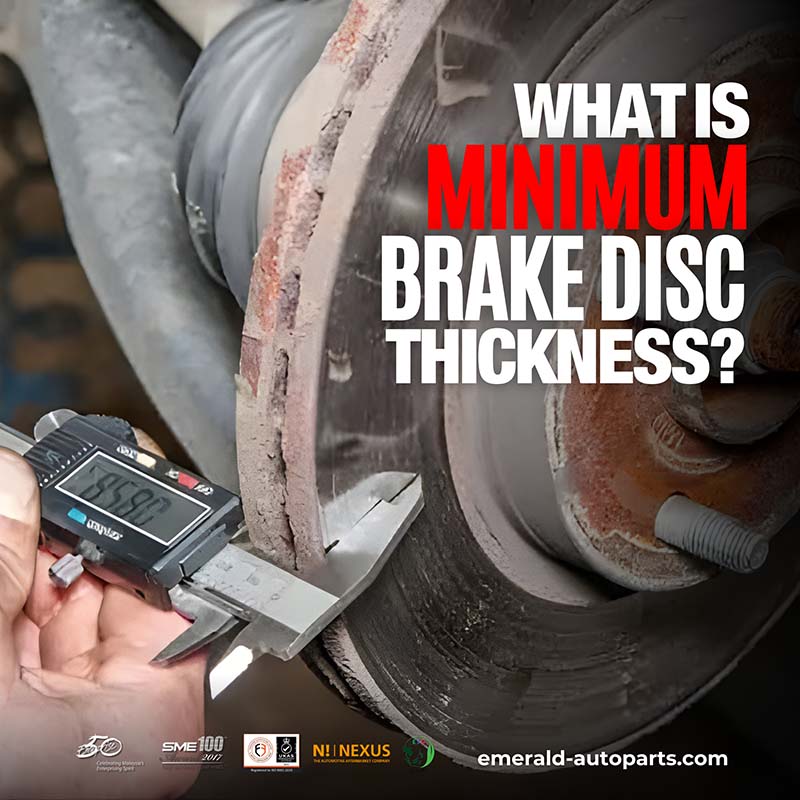
What Is Minimum Brake Disc Thickness?
Brake discs aren’t invincible. Every time you press the brake pedal, the friction between pads and discs slowly wears down the metal. Over time, discs get thinner, and when they fall below the manufacturer’s minimum thickness specification, your brakes can start misbehaving — sometimes in dramatic ways.
The “minimum thickness” (often etched right on the disc as MIN TH = X mm) is not just a number; it’s a safety threshold. Below this, your braking system cannot guarantee the same stopping power, especially under heavy use or high temperatures.
The Risks of Driving on Worn Brake Discs
Driving with discs that are too thin isn’t just about slightly longer braking distances — it can lead to serious problems:
- Thermal Cracks – As discs get thinner, they can’t handle heat as well. Hot brakes expand unevenly, leading to cracks on the disc surface. These cracks weaken the disc and can eventually cause catastrophic failure.
- Vibrations and Noise – A worn disc may warp under heat, causing pedal pulsations, steering vibrations, and annoying squealing sounds.
- Increased Pedal Travel – Thin discs reduce the braking surface, which can cause your pedal to feel “soft” or travel further than normal. In extreme cases, caliper pistons can lose tightness, and pads may even come loose or seize.
- Fading and Vapour Lock – Particularly during heavy-duty or mountain driving, thin discs heat up faster.
- Vapour Lock: Brake fluid can exceed 200°C, creating air bubbles in the system. Compressed bubbles mean your brakes barely slow the car down even when you stomp on the pedal.
- Fading: The friction between pads and discs drops as temperature rises, increasing your stopping distance dangerously.
In short: thin discs = less safety, more stress, and a higher chance of brake failure when you need them most.
How to Measure Brake Disc Thickness
Checking disc thickness is simple if you have a gauge. Here’s how:
- Measure at at least four points on the disc.
- Take the lowest measurement as the reference.
- Compare it to the MIN TH value etched on the disc.
- If it’s below the minimum, replace the disc.
Remember: even if only one disc on the axle is worn, you must replace both sides to maintain balanced braking.
Tips for Proper Disc Maintenance
- Regular Checks: During MOT or routine servicing, always visually inspect discs. Don’t wait for noise or vibrations — by then, damage may already be underway.
- Pad Replacement: As a general rule, discs should be replaced every other brake pad replacement.
- Proper Installation: Always follow manufacturer specifications, use a torque wrench, and tighten screws in the correct sequence. Improper installation can damage new discs or pads.
- System Inspection: Check calipers, pistons, seals, and brake fluid. Worn or damaged components can accelerate disc wear.
Bottom Line
Brake discs are just as important as pads when it comes to safety. Ignoring their wear can lead to vibrations, fading, or even brake failure — all of which could endanger you and your passengers.
Regular inspections, correct measurement of minimum thickness, and timely replacement are simple steps that keep your braking system safe, reliable, and ready for anything — whether it’s city traffic, mountain roads, or spirited weekend drives.
Your brakes may not be flashy, but they are your car’s most critical safety feature. Keep them in top shape, and they’ll always have your back when it counts.
👉 Visit Emerald Auto Parts (https://emerald-autoparts.com/) or reach out directly:
Shop now: https://shopee.com.my/remsa.os
Whatsapp: +6012-638 9647
Tiktok : 1. www.tiktok.com/@emeraldautopart
Facebook : https://www.facebook.com/EmeraldAPSB/
Instagram : https://www.instagram.com/emerald_auto