
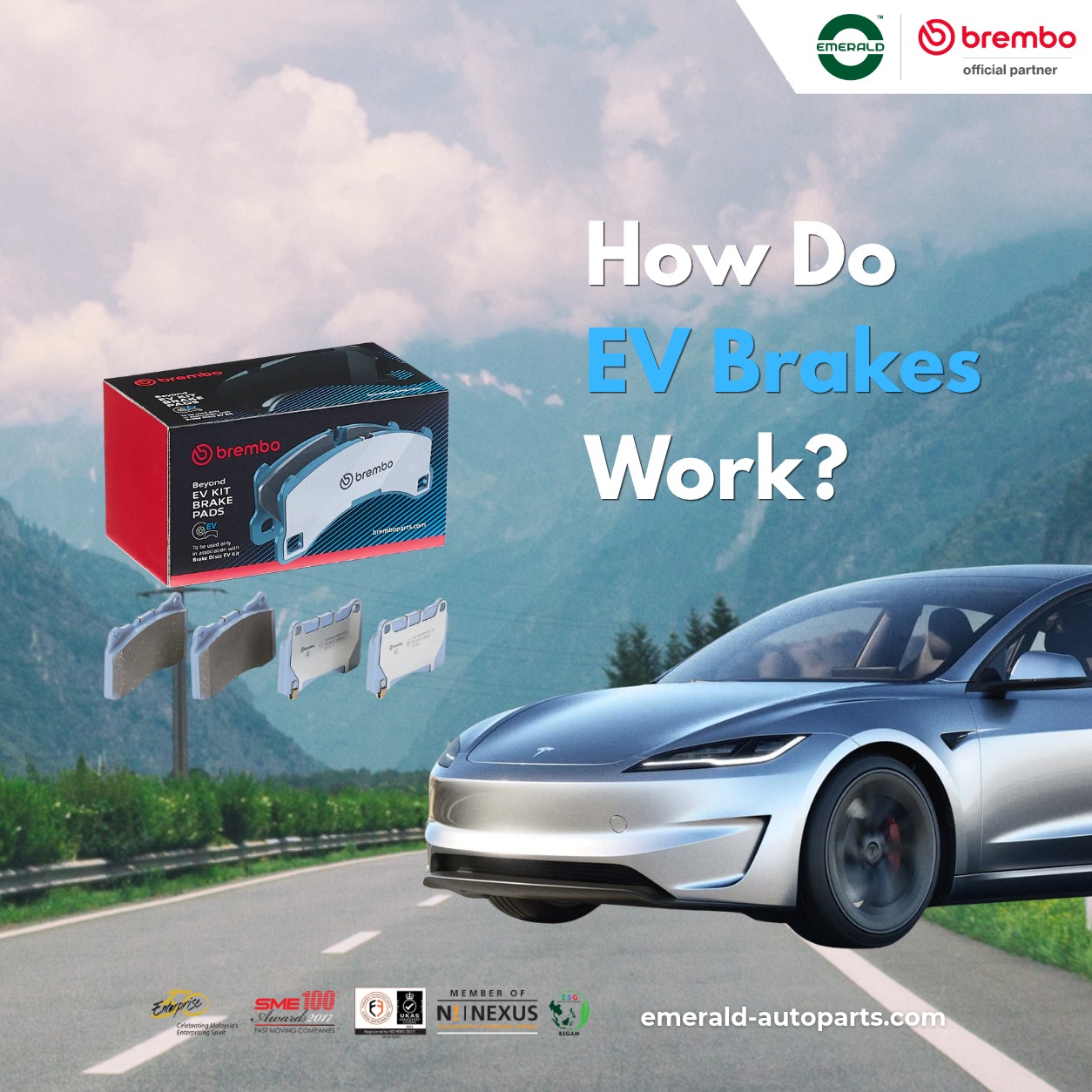
How Do EV Brakes Work?
Understanding Regenerative Braking and Convention
Electric vehicles (EVs) are becoming increasingly popular due to their energy efficiency, environmental benefits and advanced technology. However, one important component that often raises questions is the braking system.
Unlike conventional petrol and diesel vehicles, EVs use a combination of regenerative braking and traditional friction braking to slow down and stop the vehicle.
Understanding how these two systems work together can help drivers better understand EV braking performance and maintenance requirements.
- What Is Regenerative Braking?
Regenerative braking is one of the key technologies that makes electric vehicles more energy-efficient.
When the driver releases the accelerator or applies the brake pedal, the electric motor can operate as a generator. Instead of consuming electricity to drive the wheels, it converts the vehicle’s kinetic energy into electrical energy and sends it back to the battery.
This process helps recharge the battery and improve the vehicle’s overall driving efficiency.
- How Do Conventional Friction Brakes Work in EVs?
Although EVs have regenerative braking technology, they still require conventional braking systems to ensure safe and reliable stopping performance.
The friction braking system works similarly to the braking system in petrol and diesel vehicles.
When the driver presses the brake pedal:
- Hydraulic pressure is generated within the braking system.
- The brake caliper pushes the brake pads against the brake disc.
- Friction between the brake pads and disc slows down the rotating wheels.
- The vehicle gradually reduces speed and eventually stops.
Friction brakes remain essential, especially during emergency braking, sudden stops and situations where regenerative braking cannot provide sufficient braking force.
- How Do Regenerative and Friction Braking Work Together?
Modern electric vehicles use a technology called blended braking.
This system intelligently combines regenerative braking and conventional friction braking to provide smooth and effective deceleration.
During light braking, regenerative braking may handle most of the braking force. When stronger braking is required, the vehicle automatically increases the contribution from the friction braking system.
The braking control system continuously manages the balance between both systems based on driving conditions, battery capacity and braking requirements.
- Do EV Brake Pads and Discs Wear Out Less Quickly?
Generally, EV brake pads and discs may experience less wear compared to conventional vehicles because regenerative braking reduces the frequency of friction brake usage.
However, this does not mean EV brakes are maintenance-free.
Electric vehicles are generally heavier due to their battery packs. Their braking systems must be designed to handle the vehicle’s weight and braking demands.
Some common maintenance concerns include:
- Brake Disc Corrosion: Less frequent friction braking may allow rust and oxidation to develop on the disc surface.
- Brake Noise: Surface corrosion or uneven disc conditions may contribute to unwanted braking noise.
- Brake Pad Deterioration: Brake pads can still deteriorate over time, even when they are not heavily used.
- Brake Caliper Issues: Infrequent brake operation may contribute to corrosion or sticking in certain braking components.
Regular inspection is important to maintain braking safety and performance.
- Why Choose Brembo Brake Pads for Your EV?
When it comes to braking performance, choosing the right brake pads is essential. Brembo is a globally recognised braking brand known for its engineering expertise, braking technology and commitment to product quality.
Here are several reasons why drivers may consider Brembo brake pads for their electric vehicles.
- Advanced Braking Technology
Brembo develops braking solutions with a focus on braking performance, safety and reliability. Its brake pad formulations are designed to deliver consistent braking characteristics under their intended operating conditions.
- Reliable Braking Performance
Although regenerative braking handles part of the deceleration process, friction brakes remain important for sudden stops and situations requiring additional braking force. Suitable Brembo brake pads help provide dependable friction braking performance.
- Different Brake Pad Formulations
Brembo offers different brake pad ranges and formulations to meet various vehicle applications and driving requirements. Depending on the specific product, drivers can choose solutions designed around factors such as braking response, comfort, noise and dust characteristics.
- Brand Reputation and Engineering Expertise
With extensive experience in braking systems, Brembo continues to develop braking products for different vehicle applications. This engineering background makes Brembo a recognised choice in the automotive braking industry.
- Vehicle-Specific Compatibility
Choosing the correct brake pad is just as important as choosing the brand. Brembo brake pads are developed for specific vehicle applications, so drivers should always verify compatibility with their exact EV model before purchasing.
Important: Not every Brembo brake pad is suitable for every electric vehicle. Always check the vehicle application and product specifications before installation.
- Why Is Brake Maintenance Still Important for EVs?
Even though regenerative braking reduces reliance on conventional brakes, the friction braking system remains a critical safety component.
Drivers should regularly inspect their brake pads, discs, calipers and brake fluid according to the vehicle manufacturer’s maintenance recommendations.
Choosing suitable brake components is also important. Brake pads and discs must meet the vehicle’s specific requirements, including its weight, braking system design and driving conditions.
Visit Emerald Auto Parts (https://emerald-autoparts.com/) or reach out directly:
Whatsapp: +6012-638 9647
Tiktok :
www.tiktok.com/@emerald.auto.part
Facebook :
https://www.facebook.com/EmeraldAPSB/
Instagram :